

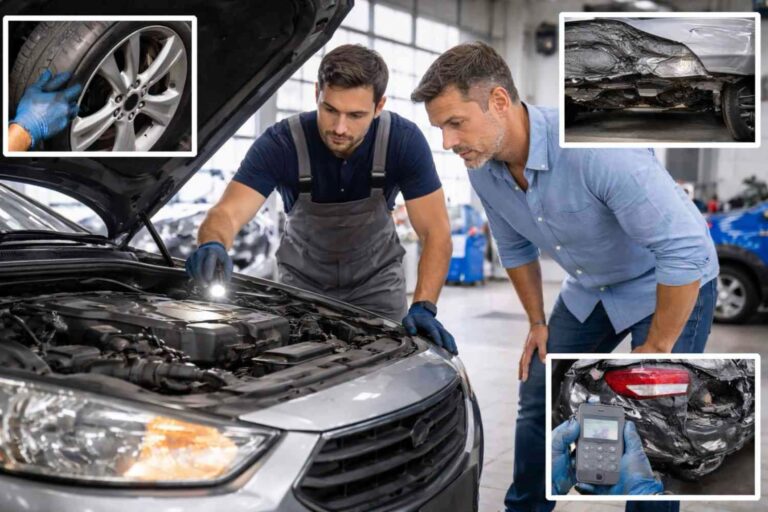
Understanding Diminished Value
Understanding Diminished Value is easier to understand when you focus on real decisions rather than confusing jargon. This guide explains what to check, what to document, and when it makes sense to ask a qualified professional for help. The goal is to help drivers make informed choices without promising outcomes that depend on vehicle condition, insurance coverage, or state law.
At 411 Collision, we believe clear information should come before a stressful decision. Whether you are getting ready for a trip or sorting out what happens after an accident, use the steps below as a practical starting point.
Why a repaired car may be worth less
A vehicle can look excellent after repairs and still attract a lower resale offer because its accident history is known. That potential reduction is called diminished value. It is different from the cost to repair the car and is not automatically covered in every claim.
Three commonly discussed categories
Immediate diminished value describes a drop in value right after a collision, before repair. Inherent diminished value describes the remaining stigma after proper repairs. Repair-related diminished value concerns defects or incomplete work that further reduce value.
Quick actions
- Write down what you noticed and when it began.
- Take clear photographs when it is safe to do so.
- Ask for written findings and the next recommended step.
Factors that influence a claim
Vehicle age, mileage, make, prior accidents, severity of damage, structural repairs, quality of work, and local buyer demand all matter. A nearly new vehicle with documented structural repairs may be affected differently from an older car with cosmetic damage.
Coverage depends on the claim and state
Third-party liability claims and first-party collision claims can be treated differently. Some states have specific rules or case law; policy wording and exclusions also matter. Avoid assuming that every accident automatically creates a payable diminished-value claim.
Document the before-and-after picture
Save the original damage photos, estimate revisions, final invoice, repair records, and any vehicle-history information. Comparable listings and a credible independent valuation may help explain the difference between market value before and after the loss.
Quick actions
- Write down what you noticed and when it began.
- Take clear photographs when it is safe to do so.
- Ask for written findings and the next recommended step.
How to discuss diminished value with an insurer
Ask whether the claim type permits diminished-value consideration, what evidence is required, and how the amount is calculated. Request the decision in writing. If you disagree, review your policy and state insurance department resources.
Repairs and value are separate conversations
A shop’s job is to restore the vehicle using an appropriate repair plan. The insurer determines claim payments. A careful repair record may support a later valuation discussion, but no shop can promise a particular diminished-value recovery.
Practical details worth remembering
A practical example
Imagine discovering a warning light the evening before a long drive. It may be tempting to ignore it because the vehicle still runs, but the better approach is to check the owner’s manual and obtain a diagnosis when the warning suggests a safety or reliability concern. A short delay at home is usually easier to manage than a breakdown far from familiar services.
For diminished value after an accident, the useful question is not simply “what usually happens?” but “what does the evidence show in this particular situation?” Vehicle history, conditions, and timing can change the answer. If something is unclear, ask for an explanation in plain language and note the answer for future reference.
What to ask a professional
Ask what was inspected, which findings are urgent, what can reasonably wait, and whether any manufacturer procedure applies. Request written documentation. Clear questions make it easier to compare recommendations and avoid confusion about what the vehicle needs.
For diminished value after an accident, the useful question is not simply “what usually happens?” but “what does the evidence show in this particular situation?” Vehicle history, conditions, and timing can change the answer. If something is unclear, ask for an explanation in plain language and note the answer for future reference.
Common mistakes to avoid
One frequent mistake is assuming that a quick visual check tells the whole story. Another is waiting until the last minute, when parts or appointments may not be available. Give yourself time to address a concern, review the paperwork, and make a practical decision.
For diminished value after an accident, the useful question is not simply “what usually happens?” but “what does the evidence show in this particular situation?” Vehicle history, conditions, and timing can change the answer. If something is unclear, ask for an explanation in plain language and note the answer for future reference.
Keep records that matter
Store dated photographs, invoices, service history, and written communications in one folder. Good records help you remember what happened and can be useful if a repair, warranty, or insurance question arises later. Include the vehicle identification number when appropriate.
For diminished value after an accident, the useful question is not simply “what usually happens?” but “what does the evidence show in this particular situation?” Vehicle history, conditions, and timing can change the answer. If something is unclear, ask for an explanation in plain language and note the answer for future reference.
When circumstances change
Conditions can shift after the original plan or estimate. Weather may worsen, damage may become more apparent, or an insurer may request more documentation. Reassess using the latest information rather than relying on an earlier assumption.
For diminished value after an accident, the useful question is not simply “what usually happens?” but “what does the evidence show in this particular situation?” Vehicle history, conditions, and timing can change the answer. If something is unclear, ask for an explanation in plain language and note the answer for future reference.
A final decision checklist
Before moving forward, confirm the safety issue, the responsible contact, the expected next step, and any deadline. Ask for clarification when terminology is unfamiliar. A careful decision is not always the fastest one, but it is easier to defend and follow up.
For diminished value after an accident, the useful question is not simply “what usually happens?” but “what does the evidence show in this particular situation?” Vehicle history, conditions, and timing can change the answer. If something is unclear, ask for an explanation in plain language and note the answer for future reference.
Putting the advice into practice
In practice: Why a repaired car may be worth less
Take a moment to apply this point to your own vehicle. A vehicle can look excellent after repairs and still attract a lower resale offer because its accident history is known. That potential reduction is called diminished value. It is different from the cost to repair the car and is not automatically covered in every claim. A useful next step is to record the date, note any symptoms or questions, and decide whether the matter calls for an inspection, a phone call, or simply an item on your pre-trip checklist. Do not rely on assumptions about another driver’s experience; the same visible symptom can have more than one cause.
In practice: Three commonly discussed categories
Take a moment to apply this point to your own vehicle. Immediate diminished value describes a drop in value right after a collision, before repair. Inherent diminished value describes the remaining stigma after proper repairs. Repair-related diminished value concerns defects or incomplete work that further reduce value. A useful next step is to record the date, note any symptoms or questions, and decide whether the matter calls for an inspection, a phone call, or simply an item on your pre-trip checklist. Do not rely on assumptions about another driver’s experience; the same visible symptom can have more than one cause.
In practice: Factors that influence a claim
Take a moment to apply this point to your own vehicle. Vehicle age, mileage, make, prior accidents, severity of damage, structural repairs, quality of work, and local buyer demand all matter. A nearly new vehicle with documented structural repairs may be affected differently from an older car with cosmetic damage. A useful next step is to record the date, note any symptoms or questions, and decide whether the matter calls for an inspection, a phone call, or simply an item on your pre-trip checklist. Do not rely on assumptions about another driver’s experience; the same visible symptom can have more than one cause.
In practice: Coverage depends on the claim and state
Take a moment to apply this point to your own vehicle. Third-party liability claims and first-party collision claims can be treated differently. Some states have specific rules or case law; policy wording and exclusions also matter. Avoid assuming that every accident automatically creates a payable diminished-value claim. A useful next step is to record the date, note any symptoms or questions, and decide whether the matter calls for an inspection, a phone call, or simply an item on your pre-trip checklist. Do not rely on assumptions about another driver’s experience; the same visible symptom can have more than one cause.
In practice: Document the before-and-after picture
Take a moment to apply this point to your own vehicle. Save the original damage photos, estimate revisions, final invoice, repair records, and any vehicle-history information. Comparable listings and a credible independent valuation may help explain the difference between market value before and after the loss. A useful next step is to record the date, note any symptoms or questions, and decide whether the matter calls for an inspection, a phone call, or simply an item on your pre-trip checklist. Do not rely on assumptions about another driver’s experience; the same visible symptom can have more than one cause.
Frequently asked questions
How early should I prepare?
A week or more before a major trip is ideal for routine checks, with extra time if repairs or parts may be needed.
Can I drive if the car looks fine?
Appearance alone cannot confirm safety after a collision or when a warning light is on. A qualified inspection may be needed.
Will insurance pay for everything?
Coverage, deductibles, limits, fault rules, and state requirements differ. Review your policy and request a written explanation.
What should I bring to a body shop?
Bring the claim number if available, insurer contact information, photographs, and any estimate or repair paperwork.
How can I avoid delays?
Respond promptly to document requests, keep copies, and ask who is responsible for the next decision.
Talk with 411 Collision
Need help understanding collision damage or planning your next step after an accident? Contact 411 Collision to discuss your concerns and ask about an inspection or estimate. We can help you understand the repair process; your insurer determines coverage and payment.
