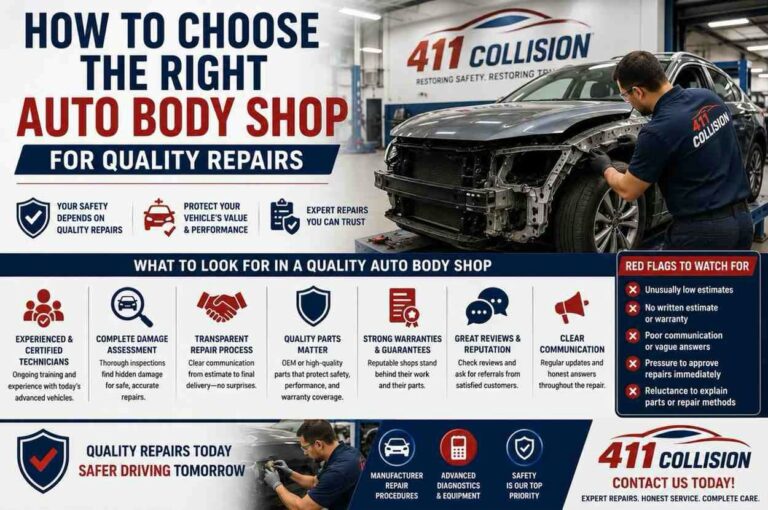
After an accident, choosing the right collision repair shop is one of the most important decisions you will make about your vehicle. The shop does more than fix dents and repaint damaged panels. It may need to identify hidden damage, restore structural components, coordinate with insurance, source replacement parts, diagnose electronic systems, and verify that the vehicle is ready to return to the road.
A low estimate or fast promised turnaround can be appealing, especially when you need your car back. But collision repair quality depends on the complete repair process, not one number on an estimate. Experience, equipment, repair planning, parts decisions, refinishing, communication, and quality control all matter.
For Miami drivers, there are many auto body shops to choose from. This guide explains how to compare them, what questions to ask, which warning signs to avoid, and how to make a more informed decision after a collision.
Why Choosing the Right Collision Repair Shop Matters
A collision can affect much more than the vehicle’s appearance. Damage may extend to structural areas, suspension components, bumper reinforcements, sensors, wiring, cooling systems, restraint systems, or advanced driver-assistance technology.
If a repair shop focuses only on visible cosmetic damage, important problems can be missed. A professional collision facility should evaluate the damaged area as a complete system and follow the repair procedures required for the vehicle.
The quality of the repair can affect:
- Vehicle appearance and paint finish
- Panel alignment and body gaps
- Structural integrity
- Steering and handling
- Operation of lights, sensors, cameras, and driver-assistance systems
- Water and wind sealing
- Long-term corrosion protection
- Resale and trade-in perception
- Your confidence in the vehicle after the repair
1. Look for Real Collision Repair Experience
General automotive repair and collision repair are different specialties. A mechanic may be excellent at engines, brakes, and maintenance but not equipped for body, structural, and refinishing work.
A collision repair facility should have experience with the types of repairs your vehicle needs. That may include bumper repair, dent correction, panel replacement, welding, frame and structural repair, refinishing, scanning, and insurance-related documentation.
Ask About Your Vehicle Type
Vehicles vary widely in construction and technology. Luxury, imported, electric, hybrid, performance, and late-model vehicles can require specific tools, materials, procedures, parts, or calibration.
Ask whether the shop regularly works on your make and model and how it accesses the repair information needed for the job.
MTJ Paint & Body Shop, the Miami repair facility behind 411 Collision, states that it works on domestic, luxury, and imported vehicles and provides collision repair, auto body repair, frame and structural repair, paint and refinishing, and insurance claim assistance.
2. Evaluate the Shop’s Damage Assessment Process
A good estimate starts with a good inspection. The estimator should look beyond the obvious dent and consider what may be damaged behind the visible panels.
Some hidden collision damage cannot be confirmed until the vehicle is disassembled. This is normal. A responsible shop should explain that the initial estimate may change if teardown reveals additional accident-related damage.
Questions to Ask About the Inspection
- Will you inspect for hidden damage?
- Does the vehicle need disassembly before the complete repair plan is known?
- How do you check for structural damage?
- Will you inspect the suspension or alignment if a wheel was involved?
- Do you perform diagnostic scans when required?
- How do you determine whether ADAS calibration is needed?
- What happens if additional damage is found after work begins?
3. Compare Estimates Carefully, Not Just by Price
The lowest estimate is not automatically the best value. Two collision estimates can differ because they include different parts, labor operations, refinishing procedures, repair methods, scanning, calibrations, materials, or assumptions about hidden damage.
When comparing shops, look at what each estimate actually includes.
| Estimate Item | What to Review |
|---|---|
| Parts | OEM, aftermarket, recycled, reconditioned, availability |
| Body labor | Repair vs. replacement operations and labor time |
| Structural work | Measuring, straightening, welding, replacement procedures |
| Paint | Preparation, refinishing, blending, materials |
| Diagnostics | Pre-repair and post-repair scanning when required |
| ADAS | Calibration requirements for cameras, radar, sensors |
| Mechanical work | Suspension, cooling, steering, alignment, related systems |
| Fees/materials | Shop supplies, hazardous waste, paint materials, other charges |
| Supplement process | How hidden damage and insurer approvals are handled |
A shop should be willing to explain the estimate in plain language. If you cannot understand what you are authorizing, ask questions before signing.
4. Ask How the Shop Handles OEM and Aftermarket Parts
Replacement parts can have a major effect on cost, availability, fit, and repair planning. OEM parts come through the vehicle manufacturer’s parts channel. Aftermarket parts come from independent suppliers. Estimates may also include recycled or reconditioned components.
There is no universal rule that one category is always correct for every repair. The right decision depends on the component, vehicle, manufacturer repair procedures, insurance policy, part quality, and owner preference.
A trustworthy shop should tell you what type of parts are being proposed and explain any important differences.
Useful Parts Questions
- Which parts on my estimate are OEM?
- Are any aftermarket parts being used?
- If aftermarket parts are proposed, are they independently certified?
- Are recycled or reconditioned parts included?
- Does the manufacturer specify a particular part for this repair?
- What happens if a replacement panel does not fit correctly?
- Will the final invoice identify the parts installed?
5. Make Sure the Shop Can Handle Structural Repairs
Structural damage requires more than cosmetic body work. Depending on the vehicle, collision forces can affect rails, pillars, floor sections, aprons, crossmembers, mounting points, or other load-bearing areas.
A shop performing structural repair should have appropriate measuring and straightening equipment and follow vehicle-specific repair procedures. Measurements matter because a vehicle can look straight while still being outside specification.
MTJ Paint & Body Shop lists computerized frame straightening and frame and structural repair among its current collision services.
6. Ask About Modern Vehicle Electronics and ADAS
Modern collision repair increasingly involves technology. Cameras, radar, ultrasonic sensors, blind-spot systems, parking assistance, lane-related systems, and automatic emergency braking may interact with parts located near the damaged area.
A bumper, windshield, suspension, mirror, grille, or structural repair can potentially affect sensor position or calibration requirements. The shop should know how to determine what the vehicle manufacturer requires.
A Capable Shop Should Understand
- Pre-repair and post-repair diagnostic scanning
- Sensor and camera mounting
- ADAS calibration requirements
- Wheel alignment and ride-height considerations
- Diagnostic trouble codes
- Manufacturer repair procedures
Not every repair requires calibration, but the decision should be based on the specific vehicle and procedure, not guesswork.
7. Review the Paint and Refinishing Process
A collision repair can be structurally correct and still look poor if the refinishing work is weak. Paint matching requires preparation, color evaluation, proper application, and a controlled refinishing process.
Ask how the shop handles color matching and blending. Some colors are more complex than others, especially metallic, pearl, and multi-stage finishes.
The final finish should have consistent color, gloss, texture, and panel transitions. Adjacent panels may need blending depending on the color and repair location.
8. Look at Before-and-After Work
Photos of completed repairs can help you understand the shop’s experience and the range of damage it handles. Look for examples involving bumper repair, panel replacement, side impacts, front-end damage, rear-end damage, structural work, and paint refinishing.
411 Collision maintains a before-and-after gallery showing examples of collision and body repairs. While photos cannot prove every technical detail of a repair, they can help demonstrate the shop’s body and refinishing capabilities.
9. Read Reviews, but Read Them Critically
Online reviews can be useful, but the star rating alone does not tell the full story. Look for patterns in what customers say.
Useful Review Themes
- Quality of the finished repair
- Accuracy of communication
- How the shop handled delays or parts issues
- Insurance coordination
- Professionalism
- Whether customers understood the repair process
- How the vehicle looked at delivery
- Whether the shop addressed concerns after pickup
Every busy business can receive a negative review. Pay attention to how the shop responds and whether the same complaint appears repeatedly.
10. Ask About Insurance Claim Assistance
Insurance-related collision repair involves documentation, estimates, supplements, photos, approvals, parts decisions, and communication with adjusters. A shop that regularly handles insurance claims can help organize this process.
The repair facility does not replace your insurance company or make coverage decisions, but it can document accident-related damage and communicate repair requirements.
411 Collision states that MTJ Paint & Body Shop works with insurance companies and can assist with the claim and repair process. The shop also accepts non-insurance and direct-pay repairs.
11. Understand the Supplement Process
An insurance supplement is an additional estimate for accident-related damage or required operations discovered after the initial estimate. Supplements are common because some damage cannot be seen until exterior parts are removed.
Ask the shop how it documents supplemental damage and communicates with the insurer. A clear process can reduce confusion when the repair cost or completion date changes.
A higher final repair estimate does not automatically mean something went wrong. It may simply reflect hidden damage that could not be confirmed during the initial inspection.
12. Ask About Repair Time Without Demanding an Unrealistic Promise
Drivers naturally want to know when their vehicle will be ready. A good shop should provide a reasonable estimated timeline, but it should also explain what can change it.
- Hidden damage
- Insurance approval
- Backordered parts
- Structural repair
- Paint complexity
- Mechanical repairs
- ADAS calibration
- Weekends and holidays
Be cautious when a shop guarantees an unusually fast completion date before teardown, parts availability, and insurer approvals are known. A realistic timeline is more useful than a promise the shop cannot control.
13. Ask How the Shop Communicates During Repairs
Good communication is part of good collision repair. You should know who to contact and how the shop will update you.
Useful updates explain the current stage, not simply say that the vehicle is ‘still being worked on.’ For example, the shop might tell you that teardown is complete, a supplement was approved, parts have arrived, body work is finished, the vehicle is in paint, or calibration is scheduled.
Ask Before You Leave the Vehicle
- Who is my primary contact?
- Will updates come by phone, text, or email?
- How often should I expect an update?
- Will you contact me if the estimate changes?
- Will you tell me if a part is backordered?
- Will I receive a final invoice showing completed work?
14. Review the Repair Warranty
Ask what warranty the shop provides on workmanship and refinishing, and whether replacement parts carry separate manufacturer or supplier warranties.
Do not rely only on a phrase such as ‘lifetime warranty.’ Ask what is actually covered, what is excluded, how long coverage lasts, whether it applies while you own the vehicle, and what you need to do if a problem appears later.
Get warranty terms in writing when possible.
15. Inspect the Shop’s Professionalism
The condition of the customer area alone does not determine repair quality, but the overall operation can provide useful clues. Look for an organized intake process, documented estimates, clear repair authorizations, secure vehicle handling, professional communication, and staff who can explain the repair.
A collision shop handles your vehicle, personal information, insurance details, and potentially a repair worth thousands of dollars. The process should feel organized from the beginning.
Red Flags When Choosing a Collision Repair Shop
Price and convenience matter, but several warning signs deserve attention.
- Pressure to authorize work before you understand the estimate
- Refusal to identify what type of parts will be used
- No clear process for hidden damage or supplements
- Vague answers about structural repair capabilities
- No explanation of scanning or calibration on technology-heavy vehicles
- Repeated promises of unrealistic turnaround times
- Poor communication before the vehicle is even dropped off
- Unclear warranty terms
- An estimate that omits obvious repair operations without explanation
- Requests to handle insurance payments or paperwork in ways you do not understand
If something does not make sense, ask for clarification. A reputable shop should be able to explain the repair process without pressuring you.
A Practical Collision Repair Shop Checklist
- Confirm the shop regularly performs collision and auto body repair.
- Ask whether it has experience with your make and model.
- Review how it identifies hidden and structural damage.
- Compare estimates line by line, not only by total price.
- Understand the OEM, aftermarket, recycled, or reconditioned parts proposed.
- Ask about diagnostic scanning and ADAS calibration when relevant.
- Review paint matching and refinishing capabilities.
- Look at completed repair examples and customer reviews.
- Ask how insurance supplements are handled.
- Get a realistic repair timeline and understand what can delay it.
- Confirm how the shop will communicate with you.
- Review warranty terms before authorizing repairs.
Questions to Ask Before Authorizing Collision Repairs
- What damage did you find?
- Could there be hidden damage that requires teardown?
- Is any structural repair needed?
- What replacement parts will be used?
- Are scans or calibrations required?
- How will you handle additional damage discovered later?
- Will you communicate directly with my insurer?
- What is the estimated repair timeline?
- Are any parts currently backordered?
- What warranty applies to the work?
- What quality checks happen before delivery?
- Can I see examples of similar repairs?
Why Local Experience Matters in Miami
A local collision shop can be especially helpful when you need towing, an estimate, insurance coordination, and a convenient location for follow-up. Miami drivers also deal with heavy traffic, frequent rain, intense sun, and a large mix of domestic, luxury, and imported vehicles.
For refinishing, South Florida conditions make paint preparation and corrosion protection important. For damaged vehicles, prompt attention to broken seals and exposed metal can also help reduce moisture-related problems.
MTJ Paint & Body Shop serves Miami from its location at 4515 NW 32nd Avenue and offers 24/7 contact through 411 Collision. The shop also advertises free towing from the accident scene for qualifying repairs.
Why the Cheapest Collision Repair Is Not Always the Best Value
Collision repair is not a commodity where every shop performs the exact same work. A lower estimate can reflect lower parts prices, but it can also reflect missing operations, different repair assumptions, less refinishing work, or a repair plan written before hidden damage is identified.
The goal should be a fair price for the complete repair. Ask what is included, what may change after teardown, and how the shop verifies the finished work.
A quality repair can protect the vehicle’s appearance, operation, structural condition, and value. Saving money on an incomplete repair can become expensive later.
Frequently Asked Questions
How do I know if a collision repair shop is reputable?
Look for collision-specific experience, clear written estimates, professional communication, appropriate equipment, transparent parts information, a defined supplement process, repair warranties, and consistent customer feedback.
Should I get more than one collision repair estimate?
You can compare estimates if you want more information or are paying directly. If insurance is involved, remember that estimates may differ because of parts, labor operations, hidden damage assumptions, and insurer procedures.
Can I choose my own body shop after an accident?
In general, vehicle owners can discuss repair-shop choice with their insurer, but claim procedures and coverage vary. Review your policy and ask your insurer to explain any requirements that apply to your claim.
What should a collision repair estimate include?
A detailed estimate may include parts, body labor, structural operations, paint and materials, mechanical work, scans, calibrations, and other procedures required for the repair. The final scope can change after disassembly.
What is an insurance supplement?
A supplement is an additional estimate for accident-related damage or required repair operations identified after the initial estimate. The shop documents the findings and submits them for insurer review when applicable.
Should I choose a shop based on repair time?
Turnaround matters, but it should not be the only factor. A realistic timeline that accounts for parts, insurance, structural work, paint, calibration, and quality control is better than an unrealistic promise.
Can 411 Collision work with my insurance company?
411 Collision / MTJ Paint & Body Shop states that it provides insurance claim assistance and works with insurance and non-insurance collision repairs.
Does 411 Collision offer towing?
The shop advertises free towing from the accident scene for qualifying insurance and non-insurance repairs. Contact the shop to confirm eligibility for your situation.
Choose a Collision Repair Shop You Can Trust in Miami
Choosing the right collision repair shop comes down to more than finding the closest location or lowest estimate. Look for a facility that can explain the damage, build a complete repair plan, handle structural and cosmetic work, communicate with insurance, use appropriate replacement parts, and keep you informed.
411 Collision / MTJ Paint & Body Shop provides collision repair, auto body repair, bumper and dent repair, frame and structural repair, paint and refinishing, insurance claim assistance, and qualifying accident-scene towing in Miami. The shop works with domestic, luxury, and imported vehicles and offers free estimates.
Call 305-632-1914 (24/7) or request a free estimate online to discuss your repair.
Recommended Internal Links
- 411 Collision Home
- Collision Repair in Miami
- Before & After Repairs
- Contact 411 Collision
- Repair Authorization
