After a car accident, one of the first concerns drivers have is whether their insurance policy will cover the cost of repairs. Vehicle repairs can range from minor cosmetic fixes to extensive structural restoration, making insurance coverage an important factor in the recovery process.
The answer depends on several variables, including the type of insurance coverage you carry, who caused the accident, the severity of the damage, and the specific terms of your policy.
Understanding how insurance coverage works can help drivers avoid surprises, make informed decisions, and navigate the claims process with confidence.
Featured Snippet Answer
Insurance may cover collision repairs depending on the type of coverage you have, the circumstances of the accident, and your policy terms. Collision coverage, comprehensive coverage, and liability coverage can all play a role in vehicle repairs following an accident.
Understanding Auto Insurance Coverage
Many drivers assume all insurance policies automatically cover collision repairs. In reality, coverage depends on the policy selected by the vehicle owner.
Common coverage types include:
- Liability coverage
- Collision coverage
- Comprehensive coverage
- Personal Injury Protection (PIP)
- Uninsured motorist coverage
Each serves a different purpose.
What Is Collision Coverage?
Collision coverage is specifically designed to help pay for vehicle repairs after an accident involving:
- Another vehicle
- A stationary object
- A guardrail
- A fence
- A tree
Collision coverage applies regardless of fault in many situations, subject to policy terms and deductibles.
What Is Comprehensive Coverage?
Comprehensive coverage protects against non-collision-related incidents. Examples include:
- Theft
- Vandalism
- Fire
- Hail damage
- Flooding
- Falling objects
Although comprehensive coverage helps with many types of damage, it generally does not cover collision-related repairs.
What Liability Coverage Covers
Liability insurance is designed to pay for damages you cause to others. Depending on the policy, liability coverage may help pay for:
- Other vehicle repairs
- Property damage
- Certain injury-related expenses
Liability coverage generally does not pay for repairs to your own vehicle unless additional coverage exists.
How Florida’s Insurance System Affects Claims
Florida operates under a no-fault insurance system. This primarily affects injury-related claims through Personal Injury Protection (PIP) coverage. However, vehicle repair claims may still involve:
- Your insurer
- The at-fault driver’s insurer
- Collision coverage
- Property damage liability coverage
Every claim is unique, making documentation and communication important.
What Determines Whether Repairs Are Covered?
Several factors influence coverage decisions.
Policy Type
Coverage depends heavily on the protections selected when purchasing insurance.
Cause of Damage
The source of the damage matters. For example, different coverage categories may apply for collision damage, storm damage, theft, or vandalism.
Deductibles
Most policies require a deductible before coverage begins. The deductible amount can affect claim decisions and out-of-pocket costs.
Vehicle Value
Insurance companies evaluate repair costs, vehicle value, and potential total loss thresholds. This assessment influences claim outcomes.
What Is a Total Loss?
In some cases, repair costs exceed the vehicle’s value. When this occurs, insurers may classify the vehicle as a total loss. Factors considered include:
- Vehicle age
- Market value
- Repair costs
- Salvage value
A total loss settlement differs from a repair claim.
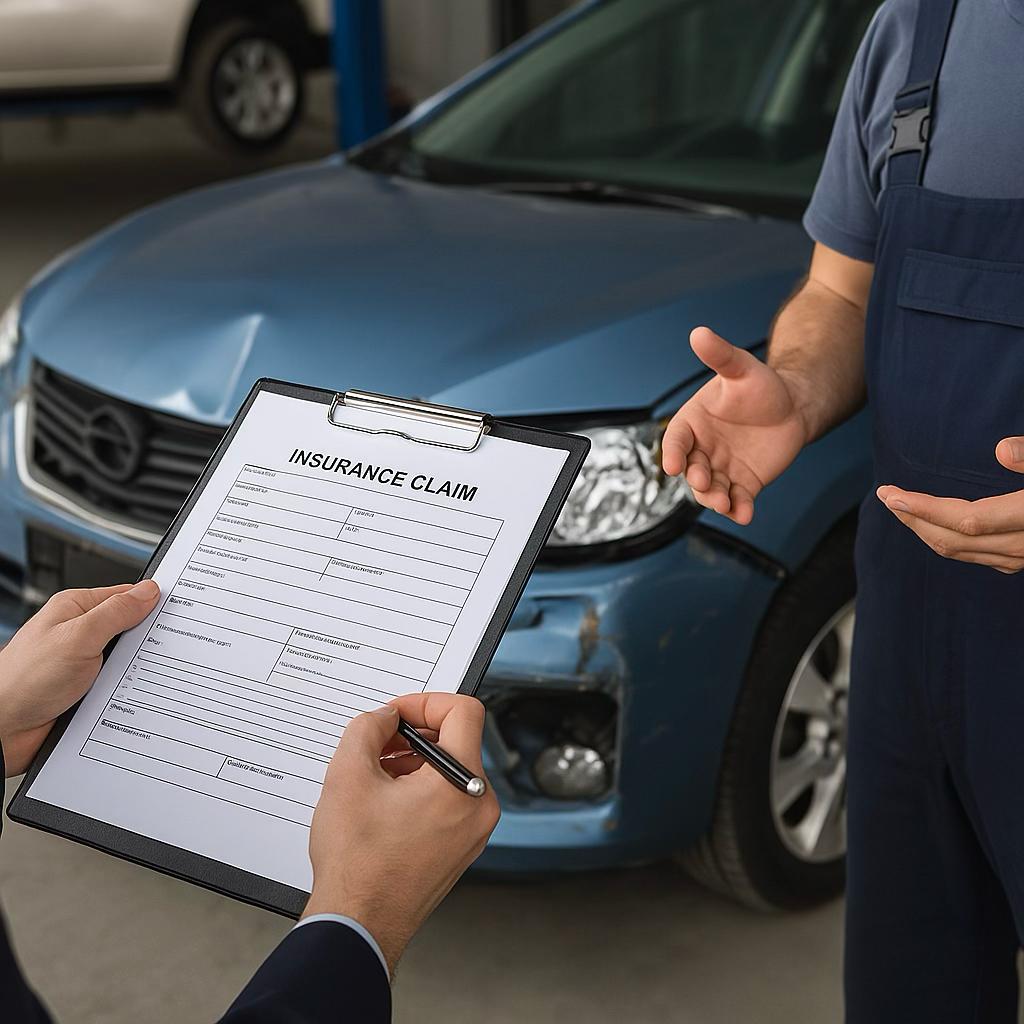
The Insurance Claim Process
Understanding the claims process can reduce stress after an accident.
Step 1: Report the Accident
Contact your insurer promptly. Provide accident details, photos, police report information, and contact information for involved parties.
Step 2: Vehicle Inspection
The vehicle undergoes inspection to assess damage.
Step 3: Estimate Preparation
Repair professionals identify visible damage, potential hidden damage, and required repairs.
Step 4: Claim Review
The insurance company reviews the estimate and policy details.
Step 5: Repair Authorization
Approved repairs move forward once coverage is confirmed.
Step 6: Vehicle Repair
Technicians complete structural, mechanical, and cosmetic repairs.
Hidden Damage and Supplemental Claims
Many accidents involve hidden damage that is not immediately visible. Examples include frame damage, suspension issues, sensor problems, and structural concerns. When additional damage is discovered, repair facilities may submit supplemental requests to insurers.
Can You Choose Your Own Repair Shop?
Many drivers are surprised to learn they often have the right to select their preferred collision repair facility. Benefits of choosing a trusted repair shop include:
- Experienced technicians
- Transparent communication
- Quality workmanship
- Assistance with insurance coordination
Drivers should review policy requirements and state regulations.
Common Insurance Claim Mistakes
Avoid these common errors:
Delaying the Claim
Prompt reporting helps prevent unnecessary complications.
Failing to Document Damage
Photos and records strengthen claims.
Ignoring Hidden Damage
Professional inspections help identify issues that may not be visible.
Selecting Repairs Based Solely on Cost
Quality repairs protect vehicle safety and value.
Real-World Example
A Florida driver is involved in a rear-end collision. Initially, visible damage appears limited to the rear bumper. During inspection, technicians discover sensor damage, alignment issues, and structural concerns. The repair facility submits supplemental documentation to the insurer, resulting in approval for additional repairs. Without a thorough inspection, these issues may have remained unresolved.
Insurance Coverage Comparison Table
| Coverage Type | Covers Collision Repairs? |
|---|---|
| Liability Coverage | Usually No (Own Vehicle) |
| Collision Coverage | Yes |
| Comprehensive Coverage | Non-Collision Events |
| PIP Coverage | Injury-Related Expenses |
| Uninsured Motorist | Depends on Policy |
Why Professional Repairs Matter
Insurance coverage is only one part of the equation. Proper repairs help maintain vehicle safety, structural integrity, appearance, and resale value. Choosing an experienced collision repair facility helps ensure repairs are completed correctly.
Internal Linking Opportunities
- Collision Repair Services
- Auto Body Repair
- Insurance Claim Assistance
- Paintless Dent Repair
- Contact Us
External Resources
- Insurance Information Institute
- Florida Highway Safety and Motor Vehicles
- National Highway Traffic Safety Administration
Frequently Asked Questions
Does collision insurance cover repairs to my car?
In many cases, yes. Collision coverage is specifically designed to help pay for vehicle repairs after an accident.
Will insurance cover hidden damage?
If hidden damage is discovered during repairs, supplemental claim procedures may apply depending on policy terms.
Can I choose my own collision repair shop?
Drivers often have the ability to select their preferred repair facility, although policy details should be reviewed.
What happens if repair costs exceed vehicle value?
The insurer may classify the vehicle as a total loss and provide a settlement based on policy guidelines.
How long does the claims process take?
Timelines vary depending on claim complexity, inspections, approvals, and repair requirements.
Final Thoughts
Insurance coverage plays a critical role in helping drivers recover after an accident. Understanding your policy, documenting damage, and working with a reputable collision repair facility can help ensure a smoother claims experience and better repair outcomes. The more informed you are about the process, the easier it becomes to make confident decisions following a collision.
Call to Action
Need help navigating an insurance claim after an accident? Contact 411 Collision today. Our experienced team can assist with inspections, repair estimates, insurance coordination, and high-quality collision repairs that help get you back on the road safely.
