OEM vs. Aftermarket Parts: Which Is Better for Collision Repairs?
Introduction
Where to go from there is the question of whether to use the automobile parts. OEM and aftermarket parts may replace the ones that needed to be fixed due to the accident. This is one of those decisions made after close consideration, as it will impact the safety, look of your vehicle, price in the market, warranty coverage, and efficiency over the long term. By knowing the differences, one can then make an informed choice and discuss repair options advocated with the insurance company and collision repair facility without hesitation.
What Are OEM Parts?
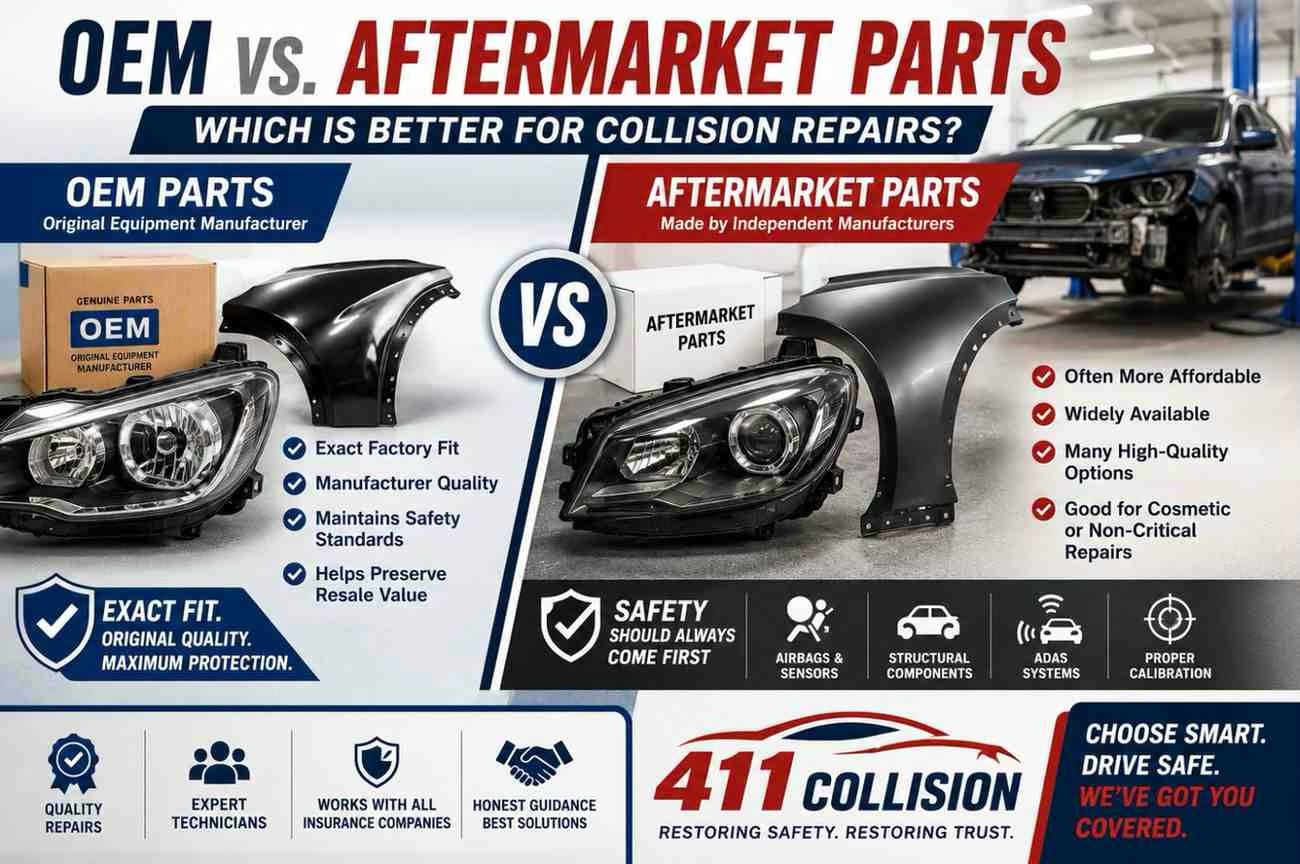
OEM parts are parts that are produced by or for the original manufacturer whoever it is. They conform to equal standards as the parts originally installed in vehicles, fitting precisely with equal quality, as well as compatibility with the security systems of the vehicle manufacturer.
What Are Aftermarket Parts?
On the other hand, aftermarket parts are actually produced by non-OEM manufacturers. It can come as high-quality formulations meeting standards and arrive at more durable products or superior paint/finish.
Advantages of OEM Parts
Vehicles will have perfect fittings because of OEM parts in contrast to other purchases in this market. Not to mention a great deal of other positives, such as preserving original vehicle performance, simplifying installation procedures, and guaranteeing the adherence to the manufacturer’s specification, these parts make it possible to maintain the value of the vehicle at the time of the resale. The importance of these parts should become more obvious once vehicles start being fitted with numerous safety systems and even structural repairs.
Advantages of Aftermarket Parts
The first advantage is that these parts are generally less expensive without much difficulty. They adjust to illustrate the aftermarket offers available options or upgrades to performance. Excellent aftermarket pieces coming from reputable manufacturers can be the best solution for a number of cosmetic fixes or not much-critical repairs.
Potential Drawbacks
Typically, the cost of OEM parts is higher while the lead time of delivery tends to be longest for them. Sometimes, the material quality, finish, and fit differ for aftermarket parts in certain weaker material, excess finish, or upper or lower fit. Consequently, the installers have to exert themselves for necessary fine-tuning.
Insurance Considerations
Some ensure that payment is made for the aftermarket parts and lower the overall cost reduction while some offer payment for OEM parts if one’s claim is not false, has a car that is older than a certain age limit, or resides in particular states. Review your insurance policy before autographing repair work.
Safety Should Always Come First
When it comes to passenger safety, airbag design has become one of the major structural parts, often involved with: the use of sensors instead of direct heat triggers, cybersecurity between them in communication, bumpers and protection elements, together with the best-equipped versions relating to ADAS. Calibration that follows repairs plays an equally significant role to guarantee that prevention of collisions and driver assistance takes place appropriately.
How 411 Collision Helps
411 Collision inspects each repair case accurately and then suggests appropriate replacement suggestions based on safety, manufacturers’ recommendations, insurance coverage, and concerns about your long-term ownership options. Technicians explain the choices you may have well before your repair acceptance.
OEM vs. Aftermarket Comparison
|
Factor |
OEM |
Aftermarket |
|
Fit |
Exact factory fit |
May vary by brand |
|
Cost |
Higher |
Usually lower |
|
Availability |
Sometimes limited |
Often widely available |
|
Warranty |
Manufacturer backed |
Varies by manufacturer |
|
Resale Value |
Generally helps preserve value |
Depends on part quality |
Frequently Asked Questions
Do I need OEM parts post an accident?
Not always. It is contingent on the damaged part, insurance policy, budget, and manufacturer recommendations.
Does aftermarket really mean low quality?
Yes. The same reputable manufacturers often make aftermarket parts quite reliable; the only aspect that differentiates them is the potential quality difference they offer.
Do OEM parts rally your repair costs?
In most cases, they may very well do so: although many may find that they are costly initially, those parts can ensure a good fitment and long-term value preservation.
Call to Action
Allow 411 Collision to help for your vehicle’s collision repairs. For proper replacement parts, we will explain the options and also work closely with your insurance company. The specific focus is that the number one priority should be toward safety, quality, and reliability for the long-term.
