

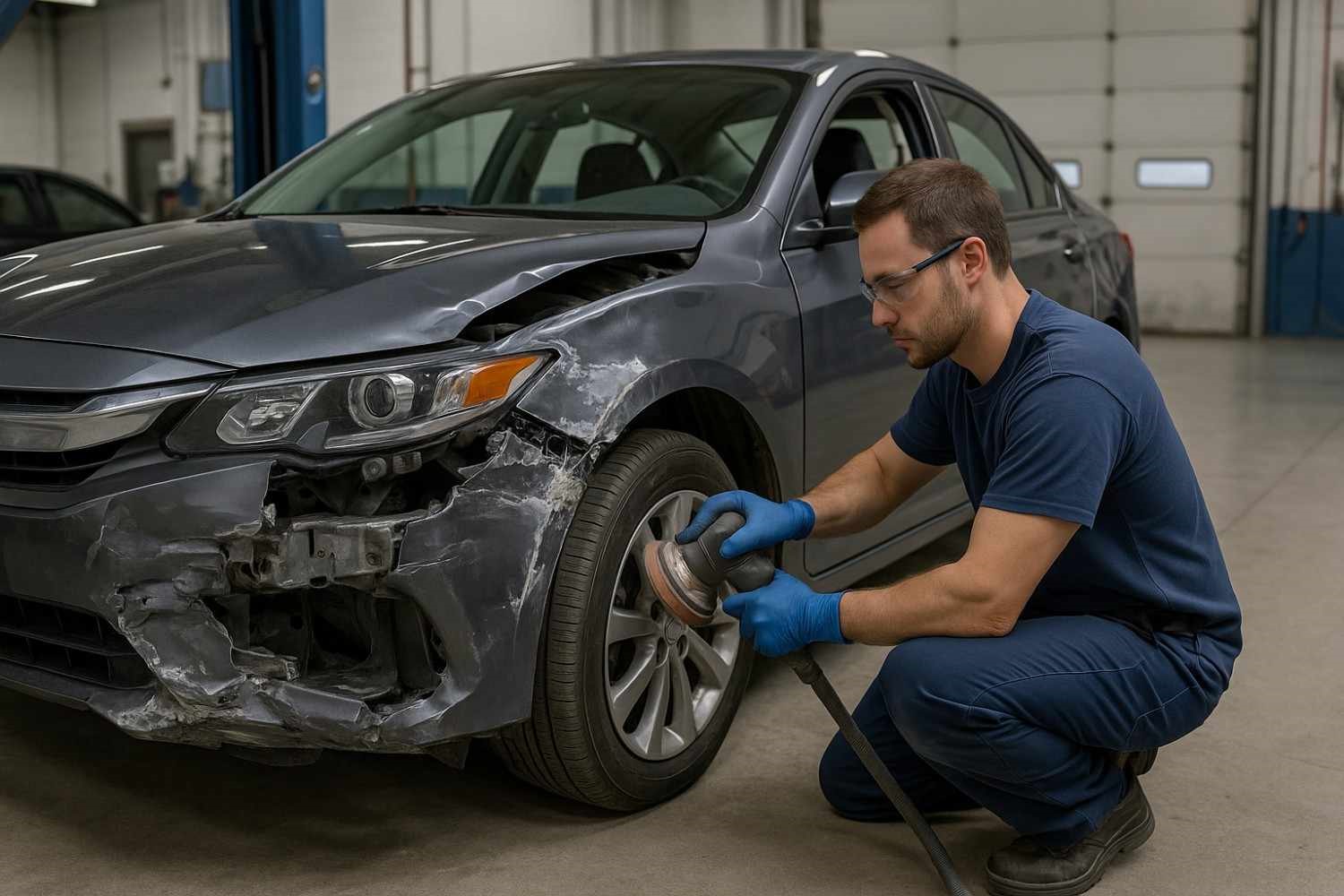
A damaged bumper is one of the most common results of vehicle accidents. Whether it’s a minor parking lot incident, a rear-end collision, or a low-speed impact, bumper damage can range from simple cosmetic issues to serious structural concerns.
One of the most common questions drivers ask after an accident is whether the bumper can be repaired or if it needs to be replaced entirely.
The answer depends on several factors, including the severity of the damage, the type of bumper, hidden structural issues, and safety considerations. Understanding the differences between bumper repair and bumper replacement can help vehicle owners make informed decisions after a collision.
Featured Snippet Answer
Minor bumper damage such as small dents, scratches, paint scuffs, and limited cracks can often be repaired. More extensive damage involving structural compromise, severe cracking, sensor damage, or impact absorption components typically requires bumper replacement.
Why Modern Bumpers Are More Important Than Ever
Many drivers assume bumpers are primarily cosmetic.
In reality, modern bumper systems help:
- Absorb collision forces
- Protect vehicle occupants
- Reduce repair costs
- Support safety systems
- Protect critical components
Today’s bumpers are engineered as part of the vehicle’s overall safety system.
Understanding Bumper Construction
Modern bumper systems typically include:
- Outer bumper cover
- Reinforcement bar
- Energy absorber
- Mounting components
- Sensors and cameras
Damage may affect one or multiple layers of the bumper system. Visible damage often represents only part of the problem.
When Bumper Repair May Be Possible
Certain types of damage can often be repaired successfully.
Minor Scratches and Paint Damage
Examples include:
- Surface scratches
- Paint transfer
- Small scuffs
Repair options may include buffing, sanding, refinishing, and spot painting.
Small Dents
Minor dents without structural damage can often be repaired. Technicians evaluate dent depth, material condition, and the location of the damage.
Limited Cracks
Small cracks in certain bumper covers may be repairable if the structural integrity remains intact. Repair methods vary depending on the bumper material and damage severity.
When Bumper Replacement Is Recommended
Some situations require complete replacement.
Severe Cracking
Large cracks often compromise bumper performance. Replacement may be the safest solution.
Structural Damage
Damage to internal components such as:
- Reinforcement bars
- Energy absorbers
- Mounting systems
Often requires replacement rather than repair.
Sensor Damage
Modern vehicles contain parking sensors, backup cameras, and collision avoidance systems. Damage affecting these components frequently requires more extensive repairs.
Multiple Impact Areas
When damage affects multiple sections of the bumper, replacement may provide a better long-term solution.
Hidden Damage Is Common
One of the biggest concerns after a collision is hidden damage. Visible bumper damage may conceal:
- Frame issues
- Sensor malfunctions
- Structural damage
- Alignment concerns
Professional inspections help identify problems that are not immediately obvious.
Repair vs Replacement Comparison
| Factor | Repair | Replacement |
|---|---|---|
| Minor Scratches | Yes | Usually Not Needed |
| Small Dents | Often Possible | Sometimes |
| Major Cracks | Limited | Recommended |
| Structural Damage | No | Yes |
| Sensor Damage | Depends | Often Required |
| Safety Concerns | Limited Cases | Frequently Recommended |
Cost Considerations
Repairing a bumper is often less expensive than replacement. However, cost should not be the only factor considered.
Vehicle owners should also evaluate:
- Safety
- Long-term durability
- Appearance
- Insurance coverage
- Vehicle value
The most affordable option is not always the best solution.
Insurance and Bumper Repairs
Insurance coverage may help pay for bumper repairs, bumper replacement, and associated damage. Coverage depends on policy terms, deductibles, and claim circumstances. Professional repair estimates help determine the most appropriate course of action.
Real-World Example
A driver experiences a low-speed parking lot collision. Initially, the bumper appears to have only a few scratches. During inspection, technicians discover hidden sensor damage, cracked mounting points, and internal reinforcement issues. Although cosmetic repairs alone seemed sufficient initially, replacement ultimately provides the safest and most reliable solution.
Why Professional Inspections Matter
Bumper systems have become increasingly complex. A professional inspection can evaluate:
- Visible damage
- Hidden damage
- Sensor performance
- Structural integrity
- Repair feasibility
This helps ensure proper repairs and long-term safety.
Common Mistakes Drivers Make
Avoid these common errors:
Ignoring Minor Damage
Small impacts can create hidden issues.
Delaying Repairs
Damage can worsen over time.
Focusing Only on Cost
Safety and performance should remain priorities.
Assuming Cosmetic Damage Is the Only Damage
Hidden damage is common, even after low-speed collisions.
Choosing the Right Collision Repair Facility
Look for a repair center that offers:
- Experienced technicians
- Modern diagnostic tools
- Insurance assistance
- Quality control inspections
- Warranty-backed repairs
Professional evaluation helps determine whether repair or replacement is the better option.
Internal Linking Opportunities
- Collision Repair Services
- Auto Body Repair
- Insurance Claim Assistance
- Paintless Dent Repair
- Contact Us
External Resources
- National Highway Traffic Safety Administration
- Insurance Information Institute
- Consumer Reports Vehicle Maintenance Resources
Frequently Asked Questions
Can a cracked bumper be repaired?
Small cracks may be repairable, but larger cracks often require replacement.
Does bumper damage affect vehicle safety?
Yes. Modern bumpers play an important role in absorbing impact forces and protecting vehicle occupants.
Can hidden damage exist behind a bumper?
Absolutely. Structural components, sensors, and mounting systems may be damaged even when exterior damage appears minor.
Will insurance cover bumper replacement?
Coverage depends on policy terms, claim circumstances, and the extent of damage.
How do I know if my bumper should be replaced?
A professional collision repair inspection is the best way to determine whether repair or replacement is appropriate.
Final Thoughts
Deciding whether to repair or replace a damaged bumper requires more than simply looking at visible damage. Safety systems, structural integrity, sensor functionality, and long-term performance all play important roles.
A professional inspection can help ensure the right decision is made and that your vehicle remains safe, reliable, and properly restored.
Call to Action
Need help evaluating bumper damage after an accident? Contact 411 Collision today for a professional inspection and repair estimate. Our team can determine whether your bumper can be safely repaired or if replacement is the better option.
