A car accident can turn an ordinary day into a stressful series of decisions. Even a minor collision can leave you wondering whether the vehicle is safe to drive, what information you need, when to contact insurance, and how to choose a repair shop. Knowing what to do after a car accident before you need that information can help you protect yourself, document the damage, and move the repair process forward with fewer surprises.
For drivers in Miami and throughout South Florida, the first priorities are safety, medical attention when needed, and accurate documentation. After that, the focus shifts to reporting the crash, starting the insurance process, arranging towing if the vehicle cannot be driven safely, and getting a professional damage assessment. This guide explains each step in practical terms and highlights several Florida-specific points drivers should know.
What to Do Immediately After a Car Accident
The minutes after a collision matter. Your first goal is not to determine who was at fault or estimate repair costs. Your first goal is to make the scene as safe as possible and make sure anyone who may be injured gets help.
1. Stop and Check for Injuries
Stop your vehicle and remain at the scene. Check yourself and your passengers for injuries. If anyone is hurt, appears disoriented, has significant pain, or needs urgent medical attention, call 911. Do not assume that another driver or witness has already called.
Florida’s official driver handbook instructs motorists involved in a crash to stop, call 911, *FHP (*347), or local law enforcement, use hazard lights, and get immediate help for anyone who is injured. It also notes that leaving the scene of a crash involving injury, death, or property damage can carry serious legal consequences.
2. Move Out of Traffic When It Is Safe and Appropriate
A damaged vehicle sitting in an active traffic lane can create a second collision. If the crash is minor, nobody is seriously injured, and the vehicle can be moved safely, get it out of the flow of traffic. Turn on your hazard lights and move to a safe nearby location.
Do not attempt to drive a vehicle that has obvious structural damage, leaking fluids, severe wheel or suspension damage, deployed safety systems that affect operation, smoke, or other signs that it may be unsafe. When in doubt, arrange towing rather than taking a chance.
3. Call Law Enforcement When Needed
Police documentation can be important for serious crashes, injuries, disputed facts, hit-and-run incidents, suspected impairment, and significant vehicle damage. Florida’s driver handbook states that law enforcement completes a written report when a crash involves DUI, death, injury, or damage that requires a vehicle to be towed.
If a crash does not require a law enforcement report, Florida may still require the driver to submit a written crash report to the Florida Department of Highway Safety and Motor Vehicles within 10 days, depending on the circumstances. Use current FLHSMV guidance for your specific situation.
Document the Accident Before You Leave
Good documentation can make the insurance and repair process much easier. If it is safe to do so, gather information before vehicles are towed away or the scene changes.
Take Photos and Video
Use your phone to capture the scene from several angles. Start with wide shots that show the position of the vehicles, lanes, intersection, traffic signs, and surrounding area. Then take closer photos of vehicle damage.
- Photograph all sides of your vehicle, not only the point of impact.
- Photograph the other vehicle or vehicles involved.
- Capture license plates and visible identifying information.
- Document broken lights, glass, debris, skid marks, road hazards, and traffic signals when relevant.
- Take photos of the interior if airbags deployed or interior components were damaged.
- If weather, lighting, construction, or road conditions may have contributed, document them.
Photos taken immediately after a car accident can help establish the condition of the vehicle before towing, storage, weather, or additional handling changes the scene.
Exchange Driver, Vehicle, and Insurance Information
Exchange the information needed to identify the drivers and vehicles involved. Florida’s driver handbook specifically advises exchanging names, addresses, phone numbers, license plate numbers, driver license information, and insurance information. Keep the conversation factual and calm.
You do not need to debate fault at the roadside. Give accurate information to law enforcement and your insurer, and avoid guessing about facts you did not see clearly.
Get Witness Information
If someone saw the collision, ask for their name and contact information. Independent witnesses may be helpful when drivers remember events differently or when the sequence of the crash is disputed.
Seek Medical Attention When Appropriate
Some injuries are obvious immediately. Others may become noticeable later, after the adrenaline and shock of the collision wear off. If you have pain, dizziness, numbness, confusion, limited movement, or any other concerning symptom, seek appropriate medical care.
Florida’s Personal Injury Protection law includes an important timing rule. Under the current statute, PIP medical benefits generally require initial services and care within 14 days after the motor vehicle accident. Coverage and eligibility depend on the policy and circumstances, so drivers should contact their insurer and qualified medical providers for guidance.
This article is not medical or legal advice. If you are injured or unsure about your condition, get professional medical help rather than trying to diagnose the problem yourself.
Notify Your Insurance Company
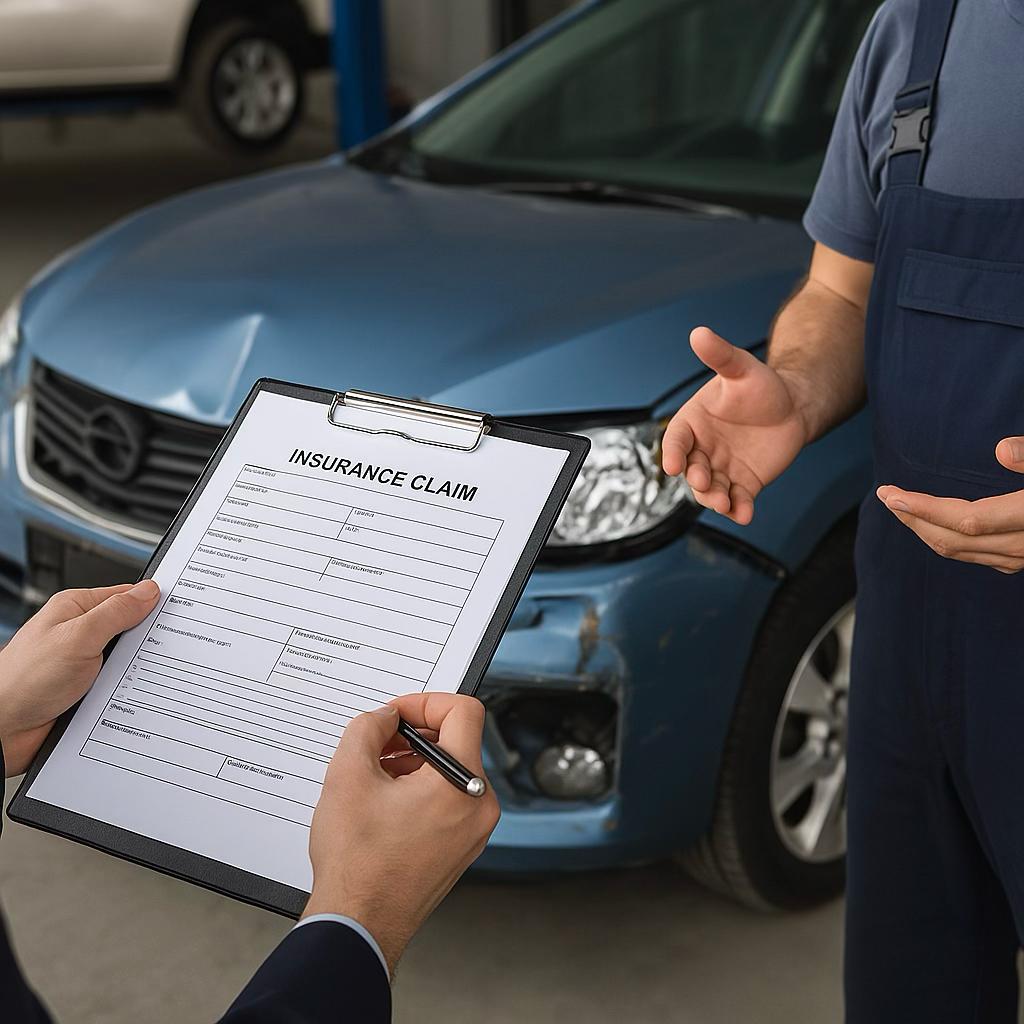
Once the immediate safety issues are handled, notify your insurance carrier as soon as reasonably possible. Your insurer can explain the claim process, applicable coverages, deductible, rental benefits, inspection requirements, and the documents it needs.
Information to Have Ready
- Your policy information
- Date, time, and location of the accident
- Police or crash report information, if available
- Photos and video of the scene and damage
- Other driver’s insurance and contact information
- Witness information
- Towing and storage details
- A basic factual description of what happened
Keep copies of claim numbers, adjuster contact information, estimates, repair authorizations, towing receipts, rental documents, and related correspondence. A simple folder on your phone or computer can save time later.
Understand That an Insurance Estimate May Not Show All Damage
The damage visible at the scene is not always the full repair picture. Modern vehicles can sustain damage behind bumpers, under body panels, around mounting points, and within structural or safety-related components. A preliminary estimate based on photos may change after a collision repair facility disassembles the damaged area and performs a closer inspection.
If additional accident-related damage is discovered during repairs, the repair facility may need to document it and coordinate with the insurer through a supplemental estimate or approval process. That is one reason choosing a shop that regularly handles insurance-related collision work can simplify the process.
Do Not Drive a Vehicle That May Be Unsafe
After a car accident, a vehicle can look drivable while still having damage that affects safe operation. A bent wheel, damaged suspension component, loose bumper reinforcement, compromised lighting, leaking cooling system, or structural issue may not be obvious from a quick roadside look.
Signs You May Need Towing
- The vehicle will not start or stay running.
- A wheel or tire is visibly damaged or sitting at an unusual angle.
- Fluids are leaking.
- Lights, mirrors, or body panels are hanging loose.
- The hood, trunk, or doors will not close securely.
- Airbags deployed or safety systems show warnings.
- Steering, braking, or suspension feels abnormal.
- The vehicle has major front, rear, or side structural damage.
411 Collision’s website states that MTJ Paint & Body Shop offers free towing from the accident scene for qualifying insurance and non-insurance repairs. If your vehicle is damaged in Miami, calling the shop early can help you determine the next practical step and avoid driving a vehicle that should be inspected first.
Choose a Collision Repair Shop Carefully
The repair facility you choose can affect repair quality, communication, turnaround, and how smoothly the insurance process moves. Price matters, but it should not be the only factor. Collision repair is about restoring damaged body and structural components correctly, not simply making visible damage disappear.
What to Look for in a Collision Repair Facility
- Experience with collision and auto body repair
- Capability to perform frame and structural repairs
- Professional paint matching and refinishing
- Clear estimates and repair explanations
- Experience coordinating insurance-related repairs
- A documented quality-control process
- Ability to repair your make and model
- Clear communication about supplements, parts, and timelines
MTJ Paint & Body Shop, the repair facility behind 411Collision.com, provides collision repair, auto body repair, paint and refinishing, dent and bumper repair, frame and structural repair, and insurance claim assistance in Miami. The shop states that it services domestic, luxury, and imported vehicles and works with insurance and direct-pay customers.
Ask What Happens After the Initial Estimate
A useful estimate should lead into a clear repair process. Ask how the shop handles teardown, hidden damage, parts ordering, insurer supplements, structural measurements, paint matching, final inspection, and updates while the vehicle is in the shop.
A professional repair process should also include a final quality check before the vehicle is returned. You should understand what was repaired, what was replaced, and any care instructions related to refinished surfaces or new components.
Pay Attention to Airbags and Child Car Seats
A collision can affect safety equipment even when the exterior damage does not look severe. If airbags deployed, they require proper replacement and system inspection. NHTSA notes that airbags can deploy only once and recommends replacing deployed airbags before the vehicle is driven again.
If a child car seat was in the vehicle, do not automatically assume it is safe to keep using. NHTSA recommends replacing car seats after moderate or severe crashes. A seat may not need replacement after a minor crash only when all of NHTSA’s minor-crash criteria are met, and the manufacturer’s instructions should always be followed.
Common Mistakes to Avoid After a Car Accident
Knowing what not to do can be just as useful as knowing the right steps.
Leaving Without Enough Documentation
A few quick photos are better than none, but a complete record is more useful. Capture the overall scene, every damaged area, vehicle positions, plates, and relevant road conditions before the scene changes.
Driving a Damaged Vehicle Without Checking It
If the car pulls, vibrates, leaks, overheats, shows warning lights, or has loose body parts, stop driving it. Towing may cost less than additional mechanical damage or the risk of another incident.
Waiting Too Long to Start the Claim and Repair Process
Delays can create practical problems, especially when a damaged vehicle is sitting in a tow yard or storage facility. Contact your insurer and repair shop promptly, keep records, and ask what needs to happen next.
Choosing a Shop Based Only on the Lowest Estimate
Two estimates may not include the same operations, parts assumptions, refinishing procedures, or hidden-damage considerations. Ask what is included and how the shop will handle additional damage found after disassembly.
Ignoring Small Damage
A cracked bumper cover, misaligned panel, or small dent may hide broken brackets, absorbers, sensors, or mounting points. If the vehicle was hit hard enough to cause visible damage, a professional inspection can help determine whether the issue is cosmetic or more extensive.
A Practical Post-Accident Checklist
- Stop, stay at the scene, and check for injuries.
- Call 911 or law enforcement when required or when safety is a concern.
- Move the vehicle out of active traffic when the crash is minor and it is safe to do so.
- Turn on hazard lights and stay away from moving traffic.
- Photograph the vehicles, damage, road, signs, and surrounding scene.
- Exchange driver, vehicle, license plate, and insurance information.
- Collect witness contact information when available.
- Seek medical care when needed and remember Florida’s PIP timing requirements.
- Notify your insurance carrier and save your claim information.
- Arrange towing if the vehicle may not be safe to drive.
- Choose a qualified collision repair shop and request a professional damage assessment.
- Keep all estimates, receipts, reports, repair documents, and insurer communications.
What Happens When You Bring the Vehicle to 411 Collision?
For Miami drivers, 411 Collision connects customers with MTJ Paint & Body Shop for post-accident repair support. According to the shop’s current website, the process starts with a call or estimate request, followed by insurance coordination when applicable, professional repair, and a final inspection.
The shop’s collision services include body panel repair, bumper and dent correction, frame and structural repair, paint and refinishing, and insurance claim assistance. Free towing from the accident scene is available for qualifying repairs. This combination can be useful when you want one point of contact for both the physical repair and the repair-related insurance coordination.
Frequently Asked Questions
What is the first thing I should do after a car accident?
Stop, check for injuries, and make the scene as safe as possible. Call 911 or law enforcement when needed. Once immediate safety is addressed, document the accident and exchange information.
Should I move my car after an accident in Florida?
If the crash is minor, the vehicle can be moved safely, and it is blocking traffic, Florida guidance says to move it or have it moved. If the vehicle appears unsafe to drive, arrange towing instead.
How soon should I notify my insurance company?
Notify your insurer as soon as reasonably possible after addressing immediate safety and medical needs. Your carrier can explain the claim process and policy-specific requirements.
Can hidden damage be found after the first estimate?
Yes. Collision damage can be hidden behind bumpers, panels, trim, and structural components. A repair shop may identify additional accident-related damage after disassembly and then document it for the insurer when applicable.
Do I need to replace a child car seat after a crash?
NHTSA recommends replacing car seats after moderate or severe crashes. After a minor crash, replacement may not be necessary only when all of NHTSA’s minor-crash criteria are satisfied and the seat manufacturer’s instructions allow continued use.
Can 411 Collision help with towing and insurance claims?
According to 411Collision.com, MTJ Paint & Body Shop offers insurance claim assistance and free towing from the accident scene for qualifying insurance and non-insurance repairs. Contact the shop to confirm eligibility and next steps for your situation.
What types of accident damage can MTJ Paint & Body Shop repair?
The shop lists collision repair, auto body repair, bumper and dent repair, frame and structural repair, and paint and refinishing among its services. It works on a wide range of domestic, luxury, and imported vehicles.
Get Help After a Car Accident in Miami
After a collision, you do not need to solve every part of the process at once. Start with safety. Document what happened. Notify the right parties. Then make sure your vehicle is inspected by a qualified collision repair facility before assuming it is safe or that the visible damage is the full extent of the problem.
If you need collision repair in Miami, contact 411 Collision / MTJ Paint & Body Shop. The team can help with a free estimate, qualifying accident-scene towing, insurance-related repair coordination, body and structural repairs, and professional refinishing.
Call 305-632-1914 (24/7) or request a free estimate online to get the repair process started.
