

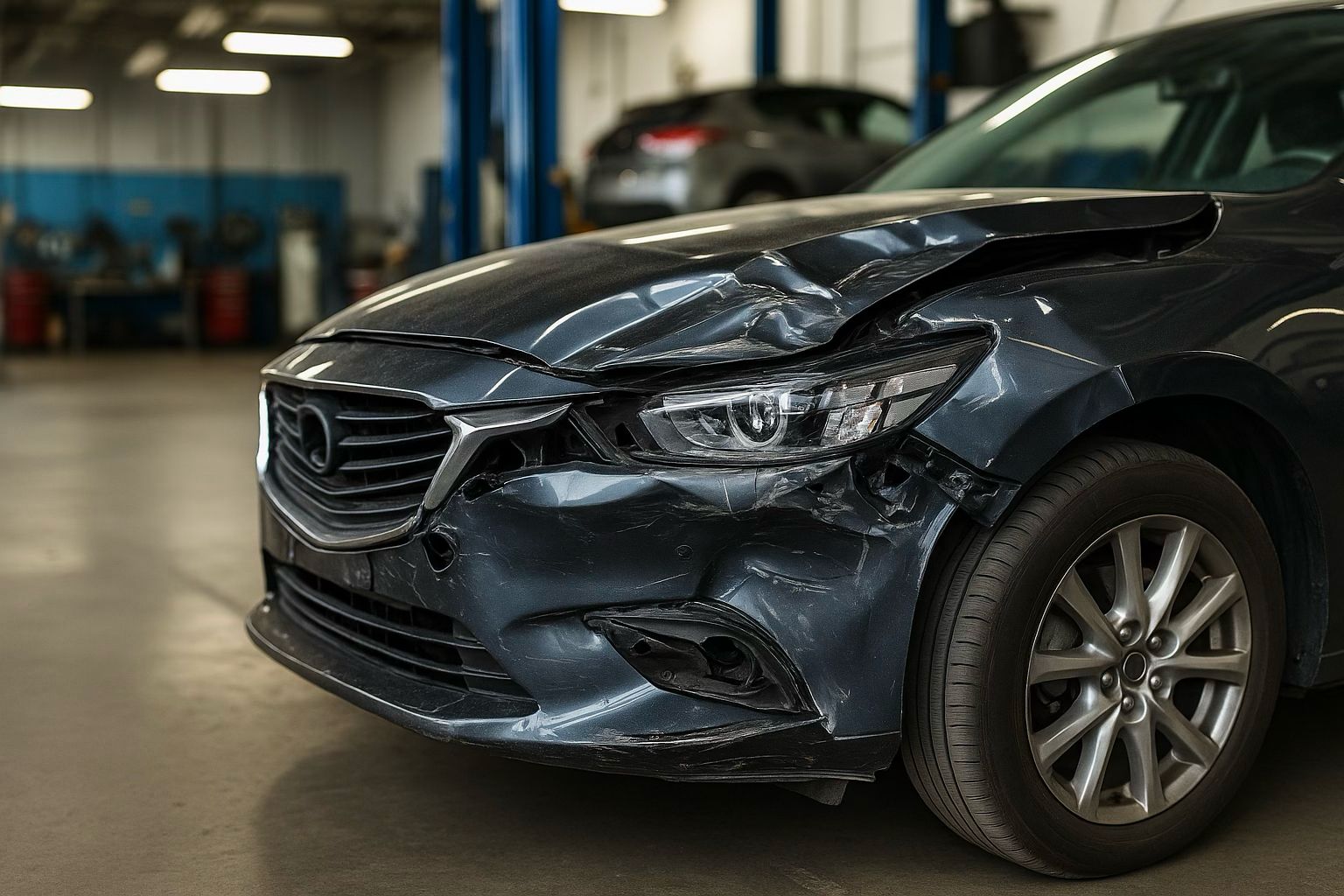
Fender benders are among the most common types of vehicle accidents. They often happen at relatively low speeds in parking lots, intersections, stop-and-go traffic, driveways, and crowded streets. Although the visible damage may look minor, even a small collision can affect bumpers, paint, lights, sensors, alignment, suspension components, or safety systems.
Understanding why these crashes happen can help drivers recognize risky situations and make safer choices. It can also help vehicle owners know what to inspect after an accident instead of assuming that a small dent is only cosmetic.
What Is a Fender Bender?
The term fender bender generally describes a minor vehicle collision that causes limited visible damage and usually occurs at low speed. It is not a technical repair classification, and the actual severity of damage cannot always be determined by appearance alone.
Modern bumpers and exterior panels can flex or hide damage underneath. A vehicle may look mostly normal while brackets, absorbers, sensors, mounting points, lights, or other components have been affected.
1. Following Too Closely
Rear-end collisions often occur because one vehicle is traveling too close to the vehicle ahead. If traffic stops suddenly, the following driver may not have enough time or distance to react.
Stopping distance is affected by speed, road conditions, tire condition, brakes, visibility, and driver reaction time.
How to reduce the risk
- Leave a reasonable following distance.
- Increase space in rain or poor visibility.
- Avoid accelerating toward slowing traffic.
- Watch several vehicles ahead when possible.
2. Distracted Driving
A few seconds of inattention can be enough to cause a low-speed crash.
Common distractions include phones, navigation systems, food, passengers, adjusting controls, looking for an item, or turning attention away from traffic.
How to reduce the risk
Set navigation, music, climate controls, and other settings before moving whenever possible. Keep attention on the driving environment.
3. Stop-and-Go Traffic
Heavy traffic creates repeated acceleration and braking. Drivers may become impatient, distracted, or overly focused on the vehicle immediately ahead.
A small delay in reacting can lead to a rear-end collision.
How to reduce the risk
Maintain space, keep speed low, anticipate brake lights farther ahead, and avoid abrupt acceleration when traffic is moving only a short distance.
4. Parking Lot Accidents
Parking lots combine vehicles, pedestrians, shopping carts, blind corners, parked cars, and drivers moving in several directions.
Many fender benders happen while backing out, turning into spaces, or driving through narrow lanes.
How to reduce the risk
- Drive slowly.
- Check mirrors and blind spots.
- Look for pedestrians before moving.
- Do not rely only on cameras or sensors.
- Pause before backing into a traffic lane.
5. Backing Up Without Checking Carefully
Drivers can miss another vehicle, pole, wall, cart, or pedestrian when reversing.
Backup cameras can improve visibility, but they do not show every angle and can be affected by dirt, glare, darkness, or obstructions.
How to reduce the risk
Look around the vehicle before entering, use mirrors and direct observation, reverse slowly, and stop if visibility is uncertain.
6. Misjudging the Size of the Vehicle
Drivers who are unfamiliar with a larger SUV, truck, rental vehicle, or newly purchased car may misjudge the front corners, rear overhang, turning radius, or width.
This can lead to contact with parked cars, curbs, columns, or garage walls.
How to reduce the risk
Take extra time in tight spaces and learn the vehicle’s dimensions before attempting difficult parking maneuvers.
7. Tight Parking Spaces
Narrow spaces leave little room for opening doors, turning, or correcting a parking angle.
A small steering error can cause bumper, fender, mirror, or door damage.
How to reduce the risk
Choose a larger space when available, approach slowly, and reposition rather than forcing the vehicle into a poor angle.
8. Opening a Door Into Another Vehicle
Not every minor collision occurs while both vehicles are moving. A door opened too quickly in a tight parking area can dent or scratch the vehicle next to it.
How to reduce the risk
Check the available space and control the door as it opens, especially in windy conditions or crowded lots.
9. Misjudging a Turn
Turning too sharply or too widely can cause the side of a vehicle to contact another car, curb, post, or barrier.
Longer vehicles and trucks may require more space for the rear wheels and body to clear an obstacle.
How to reduce the risk
Slow down before turning, look through the turn, and allow enough clearance for the entire vehicle.
10. Changing Lanes Without Enough Space
Side-swipe fender benders can happen when a driver begins changing lanes without seeing a vehicle in the blind spot or without enough room to merge.
How to reduce the risk
- Use mirrors.
- Check blind spots.
- Signal before moving.
- Avoid abrupt lane changes.
- Do not assume another driver will create space.
11. Blind Spots
Every vehicle has areas that are difficult to see directly or through mirrors. Larger vehicles may have particularly significant blind zones.
Blind-spot monitoring can help, but it should supplement rather than replace visual checks.
How to reduce the risk
Adjust mirrors properly and physically check the appropriate blind spot before changing position.
12. Failing to Yield
Minor collisions frequently occur when drivers enter an intersection, roundabout, parking aisle, or roadway without yielding when required.
Confusion about who has the right of way can quickly result in contact.
How to reduce the risk
Approach conflict points at a manageable speed, observe signs and markings, and do not assume another driver has seen you.
13. Rolling Through Stop Signs
A driver who slows but does not fully stop may misjudge cross traffic or the movement of a vehicle ahead.
This can cause front-corner, side, or rear-end collisions.
How to reduce the risk
Make a complete stop where required and verify that the intersection is clear before proceeding.
14. Sudden Stops
Sometimes a driver must brake suddenly for traffic, a pedestrian, an animal, debris, or another hazard.
The following driver may collide with the rear of the vehicle if there is insufficient space.
How to reduce the risk
Following distance is the main defense. Staying attentive to developing traffic conditions can also reduce surprise.
15. Rain and Wet Roads
Wet pavement can reduce tire traction and increase stopping distance. Heavy rain can also reduce visibility and make lane markings harder to see.
A driving style that feels comfortable in dry weather may be too aggressive in rain.
How to reduce the risk
- Reduce speed.
- Increase following distance.
- Use headlights as required.
- Avoid abrupt steering or braking.
- Keep tires and wipers in good condition.
16. Poor Visibility
Fog, heavy rain, darkness, sun glare, dirty windows, and poorly lit parking lots can make other vehicles and obstacles harder to see.
How to reduce the risk
Slow down, keep windows and lights clean, use appropriate lighting, and avoid driving faster than visibility allows.
17. Sun Glare
Low-angle sunlight can temporarily obscure traffic lights, brake lights, pedestrians, or stopped vehicles.
How to reduce the risk
Keep the windshield clean, use the sun visor when appropriate, wear suitable eyewear if needed, and reduce speed when visibility is compromised.
18. Driving Too Fast for the Situation
A posted speed limit is not always the appropriate speed for every condition.
Parking lots, construction zones, congestion, rain, and crowded streets may require substantially slower driving.
Higher speed also increases stopping distance and can turn a minor impact into a more serious collision.
19. Inattention at Traffic Lights
A driver may see a green light and begin moving without noticing that the vehicle ahead has not moved.
Similarly, looking away while waiting at a red light can lead to delayed reactions and abrupt acceleration.
How to reduce the risk
Confirm that the path ahead is actually clear before accelerating.
20. Assuming the Car Ahead Will Move
In traffic, drivers sometimes begin moving because they expect the vehicle ahead to proceed.
If that vehicle stops again or never moves, the following driver can bump into it.
Drive based on what the vehicle is doing, not what you expect it to do.
21. Aggressive Driving
Tailgating, abrupt lane changes, rushing through small gaps, and impatient acceleration can reduce the margin for error.
Even at low speeds, aggressive driving can increase the chance of contact.
How to reduce the risk
Create space and avoid turning ordinary traffic situations into contests with other drivers.
22. Fatigue
Tired drivers may react more slowly, miss visual information, or have difficulty maintaining attention.
Fatigue can contribute to rear-end crashes and parking mistakes even when speeds are low.
How to reduce the risk
Avoid driving when too tired to remain alert. Take breaks during longer trips and recognize when rest is necessary.
23. Driving While Emotionally Distracted
Stress, anger, arguments, or strong emotions can interfere with attention and decision-making.
A driver who is mentally preoccupied may miss a stopped car, a parking obstacle, or a changing traffic signal.
How to reduce the risk
If emotions are interfering with concentration, wait until you can focus adequately before driving.
24. Unfamiliar Roads or Parking Garages
Drivers may focus heavily on signs, addresses, navigation, or finding an entrance and pay less attention to nearby vehicles.
Parking garages add narrow lanes, ramps, columns, pedestrians, and tight turns.
How to reduce the risk
Slow down and allow extra time. If navigation requires significant attention, stop in a safe location before reviewing directions.
25. Construction Zones
Temporary lanes, cones, barriers, workers, and unusual traffic patterns can create confusion.
Narrow lanes also reduce clearance between vehicles.
How to reduce the risk
Reduce speed, follow temporary markings, and avoid unnecessary lane changes.
26. Poorly Adjusted Mirrors
Mirrors that are not positioned effectively can create larger blind areas.
How to reduce the risk
Adjust mirrors before driving and make sure they provide useful coverage. Direct visual checks are still necessary in many situations.
27. Relying Too Much on Parking Sensors
Parking sensors and cameras can be helpful, but they are driver-assistance systems, not substitutes for observation.
Sensors may not detect every object, and cameras can distort distance or miss obstacles outside their field of view.
How to reduce the risk
Use technology together with mirrors, direct observation, and slow movement.
28. Worn Tires
Tires with inadequate tread, damage, or improper inflation can reduce traction and affect stopping and handling.
This is especially important on wet roads.
How to reduce the risk
Check tire pressure and condition regularly and replace damaged or excessively worn tires.
29. Brake Problems
Worn or malfunctioning brakes can increase stopping distance and make low-speed collisions more likely.
Grinding, a soft pedal, pulling, warning lights, or reduced braking performance should be inspected promptly.
30. Mechanical or Electrical Problems
A vehicle can behave unexpectedly because of a mechanical or electrical fault. Stalling, sudden power loss, steering problems, or warning lights may contribute to a collision.
Regular maintenance and prompt diagnosis of new symptoms can reduce the chance that a vehicle problem becomes a traffic problem.
Why a Minor Accident Can Cause Hidden Damage
Modern vehicles are designed with bumpers, absorbers, reinforcement structures, sensors, cameras, brackets, wiring, and safety components that may sit behind the visible exterior.
A bumper cover can spring back after an impact while components underneath remain cracked, bent, disconnected, or misaligned.
Possible hidden damage
- Broken bumper brackets or retainers.
- Damaged impact absorbers.
- Bent reinforcement components.
- Parking sensor damage.
- Camera or radar misalignment.
- Broken light mounting tabs.
- Wheel alignment changes.
- Suspension damage.
- Cooling system damage.
- Wiring or connector damage.
- Trunk or hatch alignment problems.
Advanced Driver Assistance Systems After a Collision
Many newer vehicles use cameras, radar, ultrasonic sensors, and other equipment for features such as automatic emergency braking, adaptive cruise control, parking assistance, lane support, and blind-spot monitoring.
A collision can affect the position or operation of these components even when exterior damage appears limited.
Depending on the vehicle and repair, manufacturer procedures may require scanning, aiming, calibration, or other verification after components are removed, replaced, or repositioned.
What to Do Immediately After a Fender Bender
Safety should come before evaluating cosmetic damage.
- Stop the vehicle in accordance with applicable law.
- Check yourself and passengers for injuries.
- Call emergency services when injuries, hazards, or local requirements make it necessary.
- Move out of active traffic if it is safe and legally appropriate to do so.
- Turn on hazard lights when appropriate.
- Watch for passing traffic before exiting the vehicle.
- Exchange required information with the other driver.
- Document the scene when it is safe.
- Follow local reporting and insurance requirements.
What to Photograph
Photos can help document the condition of the vehicles and scene.
- Damage to your vehicle.
- Damage to the other vehicle.
- Wide views showing vehicle positions.
- License plates when appropriate.
- Traffic signs and signals.
- Lane markings.
- Road and weather conditions.
- Debris or skid marks if relevant.
- Any visible fluid leaks or broken components.
Do not place yourself in moving traffic simply to obtain a photograph.
Can You Drive the Car After a Fender Bender?
Sometimes a vehicle remains safely drivable after a minor collision, but appearance alone is not enough to make that determination.
Warning signs that may mean you should not drive
- Fluid is leaking.
- A tire or wheel is damaged.
- A body panel is rubbing a tire.
- The steering feels different.
- The brakes do not feel normal.
- Warning lights have appeared.
- The vehicle is overheating.
- Lights needed for safe driving are broken.
- A bumper or panel is loose enough to detach.
- The vehicle pulls, vibrates, or makes significant new noises.
When there is doubt about safe operation, arranging a tow is the more cautious choice.
Why You Should Inspect More Than the Dent
A visible dent or scratch may be only one part of the damage.
A professional collision inspection can look at panel alignment, mounting points, structural areas, suspension, wheels, lights, sensors, and other systems affected by the impact.
Finding hidden damage early can help prevent problems such as uneven tire wear, water leaks, sensor faults, loose panels, or poor fit between repaired parts.
Cosmetic Damage vs. Functional Damage
Cosmetic damage
- Paint scratches.
- Small dents.
- Surface scuffs.
- Minor bumper cover marks.
Functional or safety-related damage
- Broken lights.
- Damaged sensors.
- Steering or alignment changes.
- Tire or wheel damage.
- Fluid leaks.
- Loose body panels.
- Structural damage.
- Cooling system damage.
A collision can include both categories at the same time.
Why Bumper Damage Deserves Attention
A bumper is more than its painted outer cover. Depending on the vehicle, the bumper assembly can include reinforcement, energy-absorbing material, brackets, wiring, sensors, lights, trim, and other components.
Damage underneath the cover may not be visible until the bumper is inspected or removed.
Fender Damage Can Affect More Than Appearance
A damaged fender can interfere with the wheel opening, liner, lights, door clearance, or nearby mounting points.
If the fender has moved toward the tire, it may rub during turns or suspension movement.
Any contact between bodywork and a tire should be addressed promptly.
Alignment Changes After a Minor Impact
A wheel striking a curb or another vehicle can affect alignment or suspension components.
Possible signs
- The steering wheel is no longer centered.
- The vehicle pulls to one side.
- New vibration appears.
- A tire rubs.
- Tire wear becomes uneven.
- The vehicle feels different while turning.
An alignment check can determine whether adjustment or additional mechanical inspection is needed.
Common Mistakes Drivers Make After a Minor Collision
- Assuming there is no damage because the bumper looks normal.
- Continuing to drive with a tire or wheel problem.
- Ignoring new warning lights.
- Failing to photograph the damage.
- Waiting until a loose panel becomes worse.
- Ignoring sensor or camera warnings.
- Assuming every problem is purely cosmetic.
- Attempting to push severely damaged panels back into place without understanding what is behind them.
How to Reduce Your Risk of Fender Benders
No driver can eliminate every accident risk, but several habits can reduce exposure.
- Maintain adequate following distance.
- Keep your phone and other distractions out of the driving task.
- Slow down in parking lots and garages.
- Check blind spots before changing lanes.
- Reverse slowly and use multiple sources of visual information.
- Adjust speed for rain, darkness, and congestion.
- Keep tires, brakes, lights, and wipers in good condition.
- Avoid driving when too fatigued to concentrate.
- Give yourself extra time instead of rushing.
- Use driver-assistance technology as support, not as a replacement for attention.
Frequently Asked Questions
What is the most common type of fender bender?
Rear-end and parking-related collisions are common low-speed accident scenarios. The exact pattern varies by roadway, traffic conditions, and driver behavior.
Can a low-speed accident cause serious vehicle damage?
Yes. The visible damage may be limited while components behind the bumper, sensors, brackets, lights, wheels, suspension, or other systems are affected.
Should I get my car inspected after a small accident?
An inspection can be useful when there is visible damage, a change in how the vehicle drives, warning lights, sensor problems, leaks, unusual noises, or uncertainty about hidden damage.
Can a fender bender affect alignment?
Yes. An impact involving a wheel, suspension area, curb, or another vehicle can alter alignment or damage related components.
Can parking sensors be damaged in a minor collision?
Yes. Sensors, wiring, brackets, and bumper-mounted technology can be damaged or moved. Some systems may require testing or calibration after repair.
What if the bumper pops back into shape?
The outer cover returning to its original shape does not prove that components underneath are undamaged. Brackets, absorbers, reinforcement, sensors, or mounting points may still need inspection.
Should I drive if a panel is rubbing the tire?
No. Bodywork rubbing a tire can damage the tire and create an additional safety risk. The vehicle should be inspected before normal driving.
Minor Collision, Proper Inspection
Fender benders often happen during ordinary driving: following traffic, parking, backing up, changing lanes, or navigating crowded roads. Because they occur at low speeds, it is easy to underestimate the damage.
The safest approach is to document the accident, watch for changes in the way the vehicle drives, and have collision damage professionally evaluated when appropriate.
411 Collision helps drivers assess and repair collision-related damage, from visible dents and bumper damage to issues that may be hidden behind exterior panels. A careful repair process can help restore appearance, fit, function, and the affected vehicle systems after an accident.
